
Is ChatGPT Accurate? A Deep Dive into Its Performance in 2025
Is ChatGPT Accurate?
A Deep Dive into ChatGPT’s Reliability, Accuracy, and Real-World Performance in 2025
ChatGPT has become an everyday tool for millions — students, founders, coders, and professionals alike.
According to recent usage data, ChatGPT now serves over 125 million daily active users (as of July 2025), and more than 700 million weekly active users.
But one key question still lingers:
How accurate are ChatGPT’s results in real-world use?
To explore this, we’ll analyze model benchmarks, hallucination rates, domain-specific performance, and human-level comparisons — powered by insights from Chatzy.ai, your trusted platform for AI productivity tools and insights.
Overall AI Accuracy Performance
ChatGPT’s accuracy depends heavily on the model version, prompt quality, and task type.
Recent studies from 2024–2025 show that:
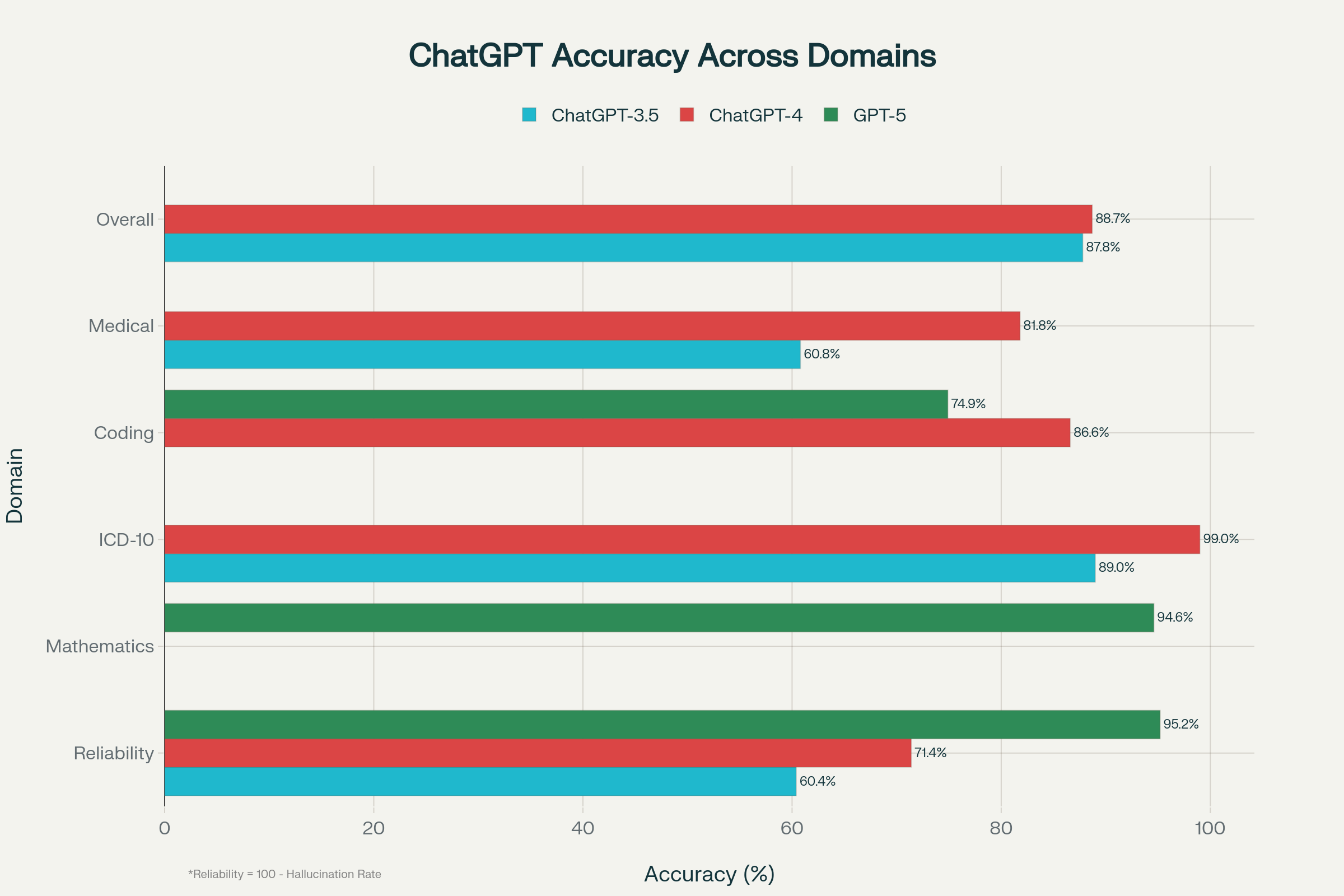
- GPT-4 achieves approximately 88.7% accuracy on academic benchmarks.
- GPT-3.5 records 87.8% accuracy.
- GPT-5 demonstrates 45% fewer factual errors than GPT-4.
On the Massive Multitask Language Understanding (MMLU) benchmark — a standardized test across 57 subjects (science, math, and humanities) —
ChatGPT-4 scores 88.7%, outperforming the average college graduate (70%).
Key metrics by domain:
- Mathematics: 89.2%
- Physics: 87.9%
- History: 91.1%
To learn how AI models are improving in factual consistency, check out AI Accuracy Benchmarks on Chatzy AI.
Domain-Specific Accuracy and GPT-5 Performance
Coding and Technical Tasks
ChatGPT has evolved into a powerful tool for developers.
- GPT-4 scores 86.6% on the HumanEval benchmark.
- GPT-5 reaches 94.6% on the AIME 2025 math test.
- SWE-bench Verified: 74.9% success on real-world coding problems.
Developers report significant gains when using ChatGPT with AI-assisted IDEs — you can explore integrations via Chatzy.ai/tools.
Academic and Research Applications
For academic and medical research queries:
- GPT-3.5 achieved 88% factual accuracy and 100% relevance, evaluated by consultant surgeons.
- Mean ratings: 4.6/5 for accuracy and 4.9/5 for relevance across 50 medical questions.
This makes ChatGPT a strong secondary assistant for literature review, research summarization, and learning support.
Hallucination and Error Rates
A persistent challenge for AI systems is hallucination — generating confident but false answers.
Hallucination rate by model version:
- GPT-3.5: 39.6% fabricated citations
- GPT-4: 28.6% fabricated citations
- GPT-5: Only 4.8%, when using Thinking Mode
GPT-5 demonstrates nearly 6x fewer hallucinations than GPT-3.5, reflecting major improvements in AI reliability.
Research shows hallucination rates decline roughly 3% per year across newer models.
Read more about AI hallucination reduction methods on Chatzy AI Research.
Reliability and Consistency
When the same questions are asked repeatedly, ChatGPT shows strong consistency:
- GPT-4: 87–88% response agreement
- GPT-3.5: 76–79%
Even across separate sessions or days, GPT-4 maintains about 85–88% consistency.
This reliability has helped position ChatGPT as a preferred model for automated workflows and business research, which you can explore on Chatzy.ai/enterprise.
Factors Affecting Accuracy
Knowledge Cutoff
ChatGPT cannot access real-time data — its accuracy depends on training cutoffs:
- GPT-3.5: April 2023
- GPT-4: Extended through 2025
This limitation means ChatGPT may not reflect recent events, financial data, or scientific discoveries unless paired with real-time tools like Chatzy Live Connect.
Task Complexity and Domain Expertise
Accuracy decreases for:
- Rare medical conditions
- Deep scientific research papers
- Complex multi-step reasoning tasks
However, GPT-5’s new reasoning improvements have narrowed these gaps significantly.
Prompt Engineering Quality
Precision prompts lead to higher-quality responses.
Providing clear context, constraints, and examples can raise factual accuracy by up to 30%, as detailed in Prompt Engineering with Chatzy AI.
Comparison with Human Experts
When directly compared to domain experts, ChatGPT performs close — though not identical — to human performance.
| Task | Human Experts | ChatGPT |
|---|---|---|
| Medical Diagnosis | 87.2% | 86.7% |
| Academic Testing | ~85% | 88–90% |
| Research Precision | 86% | 77% |
| Diagnostic Radiology | 90% | 65% |
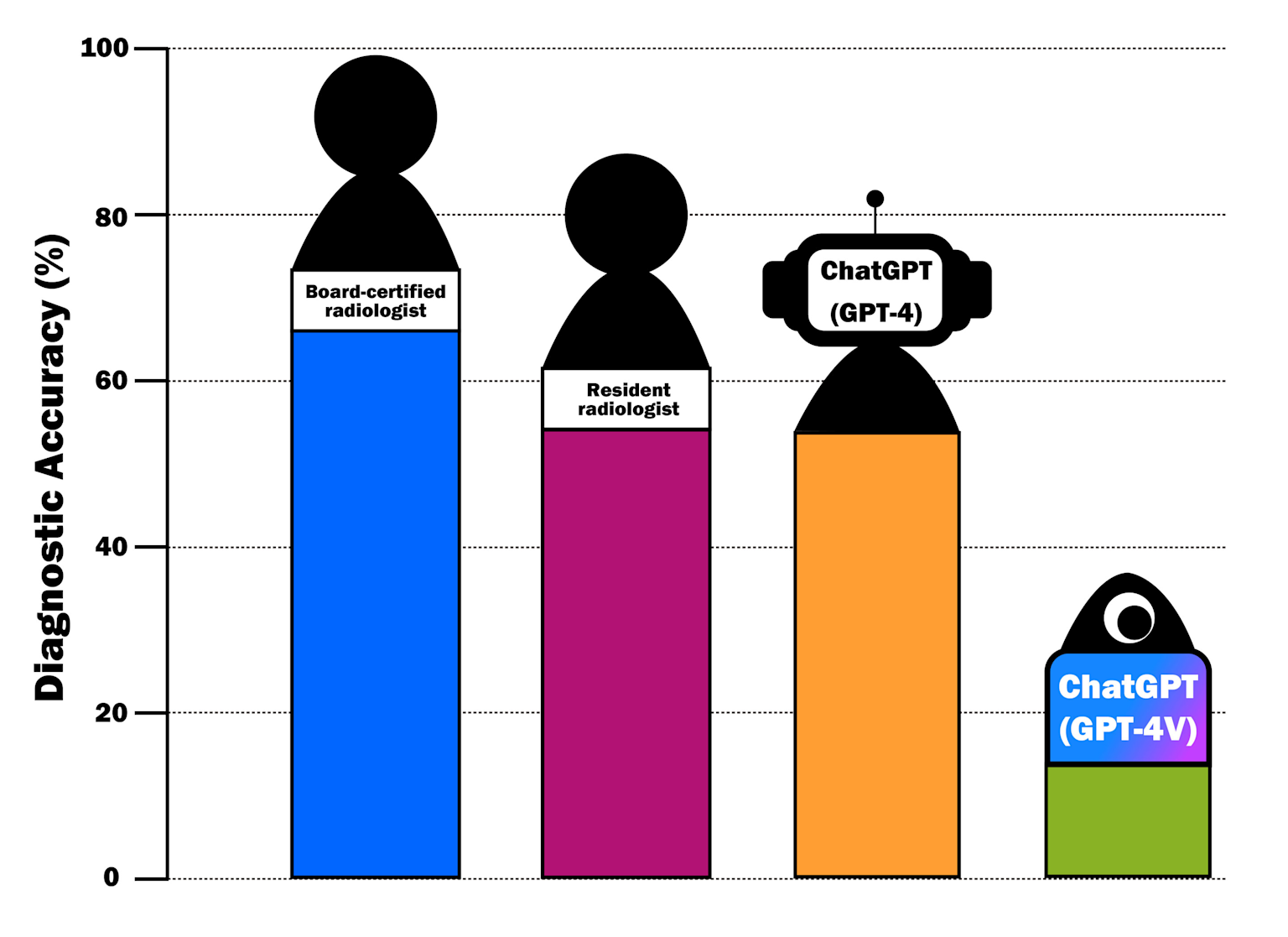
While ChatGPT often equals or surpasses average human benchmarks in general tasks, specialized expert oversight remains essential for critical decision-making.
Conclusion
ChatGPT’s accuracy has advanced dramatically — from around 87% (GPT-3.5) to nearly 89%+ with GPT-5, pushing toward human-level understanding.
Yet, limitations still exist:
- Hallucination rates between 4.8–28.6%
- Outdated data beyond model cutoff
- Lower precision in highly specialized or real-time tasks
In summary: ChatGPT is an invaluable assistant, not a substitute for human judgment.
In fields like healthcare, law, and advanced research, AI should complement — not replace — expert analysis.
To stay updated on AI accuracy, GPT-5 performance, and model reliability, visit Chatzy.ai and explore our latest insights and AI tools for smarter work.